
Parts of the Essay
The persuasive essay is made up of five paragraphs: The introduction, three body paragraphs and a conclusion.
The introduction contains the hook, subject, and thesis statement. Its purpose is to captivate the interest of the reader, introduce the subject, and clearly state the writer’s opinion on that subject.
Each body paragraph begins with a topic sentence that clearly states one reason to support the writer’s claim. The purpose of the body paragraph is to provide convincing evidence and a clear explanation to link the evidence back to the reason.
The conclusion restates the thesis, but uses different words than those used in the introduction. It summarizes the three reasons that have just been discussed and does not introduce any new reasons. It ends with a clever or thoughtful closing sentence.
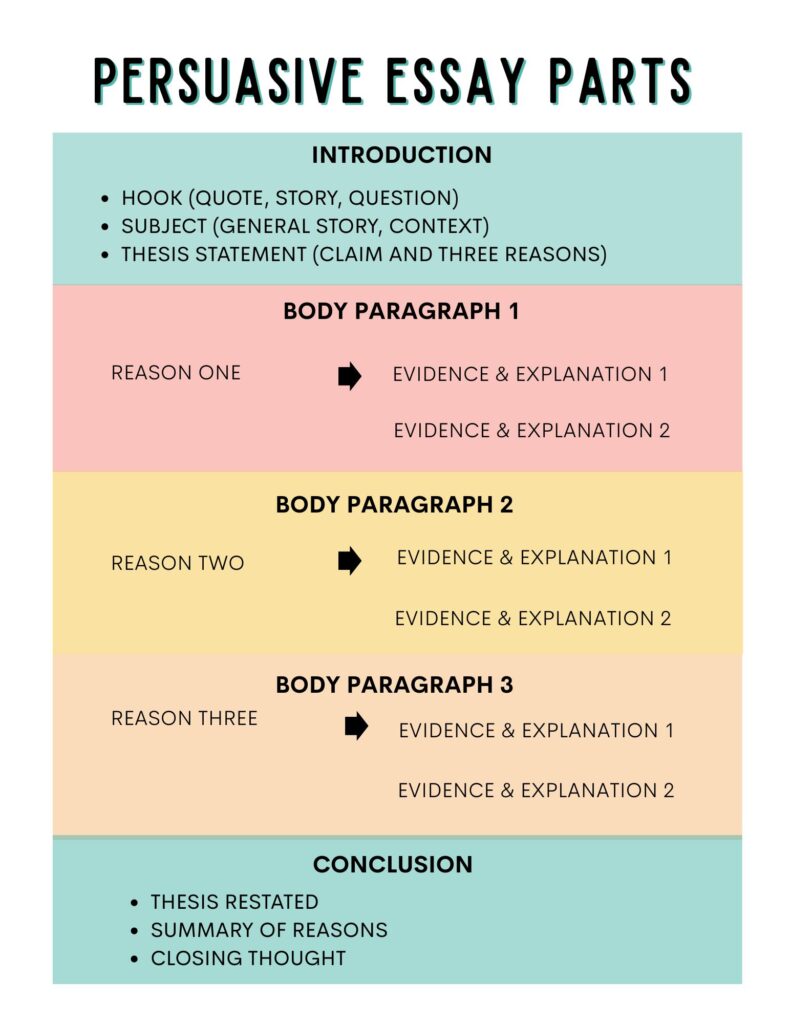
Study the graphic above for a minute. Then try to identify the parts of the essay that are missing in the following diagram.
Now see if you can remember the various elements that fit into each main part of the persuasive essay. If you can’t remember, look back at the original picture at the top of the page. Don’t worry about making mistakes. You may try this activity more than once.
Before completing this first module, here is an example of a persuasive essay about whether or not the driving age in Ontario should be raised. Read it and see if you can recognize the different parts of the essay.